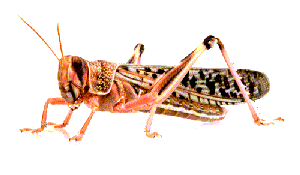
7:1 Thus have Adonai HaShem showed me; and, Hinnei, he formed locusts in the beginning of the shooting up of the latter growth; and, Behold, [it was] the latter growth after the king's mowings.
7:2 And it came to pass, [that] when they had made an end of eating the grass of the land, then I said, O Adonai HaShem, forgive, I beseech thee: by whom shall Yaakov (יעקב) arise? for he [is] small.
7:3 Adonai repented for this: It shall not be, said Adonai.
7:4 Thus have Adonai HaShem showed me: and, Hinnei, Adonai HaShem called to contend by fire, and it devoured the great deep, and did eat up a part.
7:5 Then said I, O Adonai HaShem, cease, I beseech thee: by whom shall Yaakov (יעקב) arise? for he [is] small.
7:6Adonai repented for this: This also shall not be, said Adonai HaShem.
 7:7
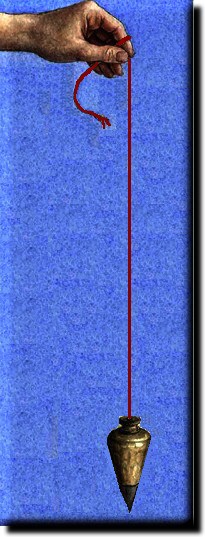
Thus he showed me: and, Hinnei, Adonai stood upon a wall
[made] by a plumbline, with a plumbline in his hand.
7:7
Thus he showed me: and, Hinnei, Adonai stood upon a wall
[made] by a plumbline, with a plumbline in his hand.
7:8 And Adonai said to me, Amos (עמוס), what seest thou? And I said, A plumbline. Then said Adonai, Hinnei, I will set a plumbline in the midst of my people Yisrael: I will not again pass by them any more:
7:9 And the high places of Yitzchak shall be desolate, and the sanctuaries of Yisrael (ישׂרא) shall be laid waste; and I will rise against the house of Yarov' am (ירבעם) with the sword.
7:10 Then Amatzyah ha Kohen of Beit El sent to Yarov' am (ירבעם) melekh Yisrael, saying, Amos (עמוס) have conspired against thee in the midst of the house of Yisrael: the land is not able to bear all his words.
7:11 For thus Amos (עמוס) said, Yarov' am (ירבעם) shall die by the sword, and Yisrael (ישׂרא) shall surely be led away captive out of their own land.
7:12Then Amatzyah said to Amos: "Go, you seer! Flee to the land of Yehudah. There eat bread, And there prophesy.
7:13 But prophesy not again any more at Beit El: for it [is] the king's chapel, and it [is] the king's court.
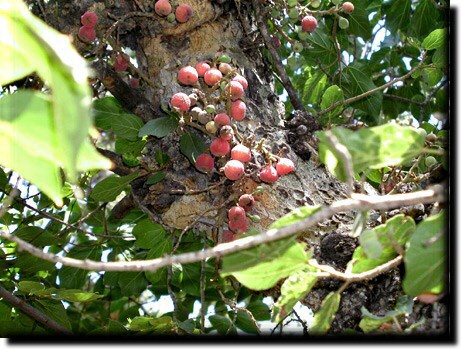
Sycomore
fruit 桑樹 (Sāngshù)/ Ficus sycomorus L / Shakam
(שׁקם)/ Shikmah
(שׁקמה )
7:14 Then answered Amos (עמוס), and said to Amatzyah, I [was] no Navi, neither [was] I a Navi's son; but I [was] a sheepbreeder, and a tender of sycomore fruit:
7:15 And Adonai took me as I followed the flock, and Adonai said to me, Go, prophesy to my people Yisrael.
7:16Now therefore, hear the word of the Adonai: You say, 'Do not prophesy against Yisrael, And do not spout against the house of Yitzchak.'
7:17 Therefore thus said Adonai; Thy wife shall be an harlot in the city, and thy banim and thy daughters shall fall by the sword, and thy land shall be divided by line; and thou shall die in a polluted land: and Yisrael (ישׂרא) shall surely go into golus forth of his land.
Wall -this "wall" was the people of Israel, who were built up as a wall, firm and strong; and so stood against their enemies, while supported by Adonay, and he stood by them. The Septuagint version is, "an adamantine wall".
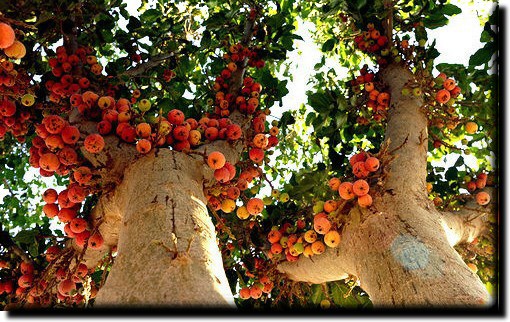
Sycomore fruit 桑樹 (Sāngshù)/ Ficus sycomorus L / Shakam (שׁקם)/ Shikmah (שׁקמה )
A feminine noun designating a sycamore tree; a sycamore fig. A fig tree native to Asia Minor and Egypt with edible fruit. It was abundant in Israel's territory The sycamore figs (Ficus sycomorus L.) originated in east central Africa and spread to Egypt and the Near East by the Iron Age. The trees are capable of as many as six crops per year. Since the fruit is inferior to that of the common fig (Ficus carica L.), the poor principally consume it.