
4:1 וְהָ֣אָדָ֔ם יָדַ֖ע אֶת־חַוָּ֣ה אִשְׁתּ֑וֹ וַתַּ֨הַר֙ וַתֵּ֣לֶד אֶת־קַ֔יִן וַתֹּ֕אמֶר קָנִ֥יתִי אִ֖ישׁ אֶת־יְהֹוָֽה:
Veha'Adam yada et-Chavah ishto vatahar vateled et-Kayin vatomer kaniti ish et-Adonai:
And Adam knew Chavah (חוּה) his wife; and she conceived, and bare Kayin (קין), and said, kaniti (וַיֵּדַע אָדָם I have acquired) a ish (man) from YHWH (יְהוָֹה).
Heb. אֶת קַיִן אֶת אָחִיו אֶת הָבֶל. The word אֶת is repeated three times to suggest additional things. This teaches that a twin sister was born with Kayin, and with Abel were born two. Awan (his twin), Calmana, Azrun, and Azura. Therefore, it is said: וַתֹּסֶף, and she continued, or added. — [from Gen. Rabbah 22:2, 3]4:2 And she again bare his brother Hevel (breath הבל). And Hevel was a ro'eh tzon (keeper of sheep), but Kayin (קין) was a oved adamah (tiller of ground).
4:3 And in the ketz (end) Yamin (days) it came to pass, that Kayin brought p'ri (fruit) ha adamah (ground) a minchah (gift) to YHWH (יְהוָֹה).(spirit of Kayin describe in James 4:13)
4:4
And Hevel (vapour, vanishes), he also brought of the bechorot
(firstlings) of his flock( sheep, goat,
cattles) and
of the chevel (fat) thereof.
sheep, goat,
cattles) and
of the chevel (fat) thereof.
And YHWH (יְהוָֹה) had respect to Hevel and to his minchah (gift): (spirit of Hevel describe Yaakov 4:14)
4:5 But to Kayin (acquire) and to his minchah (gift) he had not respect.
And
Kayin was very wroth 不甘心, and his countenance
fell.
Vayomer Adonai el-Kayin lamah charah lach velamah nafelu faneicha:
And YHWH (יהוה) said to Kayin:
Why art you wroth? and
why is
your countenance fallen?
4:7 הֲלוֹא אִם-תֵּיטִיב שְׂאֵת וְאִם לֹא תֵיטִיב לַפֶּתַח חַטָּאת רֹבֵץ וְאֵלֶיךָתְּשוּקָתוֹ וְאַתָּה תִּמְשָל-בּוֹ׃
Halo im-teitiv se'et ve'im lo teitiv lapetach chatat rovetz ve'eleicha teshukato ve'atah timshal-bo.
If you do well, will you not be accepted? And if you
do not do well, sin is crouching at the door . And its desire is for you, but you must master it."
4:8 And Kayin (קין) talked with Hevel (breath הבל) his brother:"Let us go to the field" and it came to pass, when they were in the field, that Kayin rose up against Hevel his brother, and slew him. (James 1:12-15 sin bring death)
4:9 And YHWH (יהוה) said to Kayin:
Ay (where) [is] Hevel achi cha (your brother)? ve (And) yomer lo yada ti(I know not): ha shomer achi (brother's keeper) anokiy (I)?
4:10 וַיֹּ֖אמֶר מֶ֣ה עָשִׂ֑יתָ ק֚וֹל דְּמֵ֣י אָחִ֔יךָ צֹעֲקִ֥ים אֵלַ֖י מִן־הָֽאֲדָמָֽה׃
Vayomer meh asita; kol demei achicha, tzo'akim elai min-ha'adamah.
He said, “What have thou done? The voice of thy brother’s bloods cries to Me from the ground.
4:11 וְעַתָּ֖ה אָר֣וּר אָ֑תָּה מִן־הָֽאֲדָמָה֙ אֲשֶׁ֣ר פָּצְתָ֣ה אֶת־פִּ֔יהָ לָקַ֛חַת אֶת־דְּמֵ֥י אָחִ֖יךָ מִיָּדֶֽךָ׃
Ve'atah arur atah; min-ha'adamah asher patzetah et-piha, lakachat et-demei achicha miyadecha.
Now thou are cursed from the ground, which has opened its mouth to receive thy brother’s bloods from your hand.
4:12 When you cultivate the ground, it shall not yield to thee her strength; a fugitive and a vagabond shall thou be on earth.”
4:13 And Kayin said to YHWH (יְהוָֹה)
My punishment is greater than I can bear.
4:14 See, you hast driven me out this day from the face of ha adamah; and from your face shall I be hid; and I shall be a fugitive and a vagabond in ha Eretz; and it shall come to pass, that every one that finds me shall slay me.
4:15 And YHWH (יהוה) said to him:
Therefore whosoever slays Kayin, vengeance shall be taken on him shivatayim (seven times).
And YHWH (יְהוָֹה) set a mark upon Kayin, lest any finding him should kill him.
4:16 And Kayin yatza (went out exile, יצא) from the presence of YHWH (יְהוָֹה), and dwelt in the land of Nod, on the east of Eden.
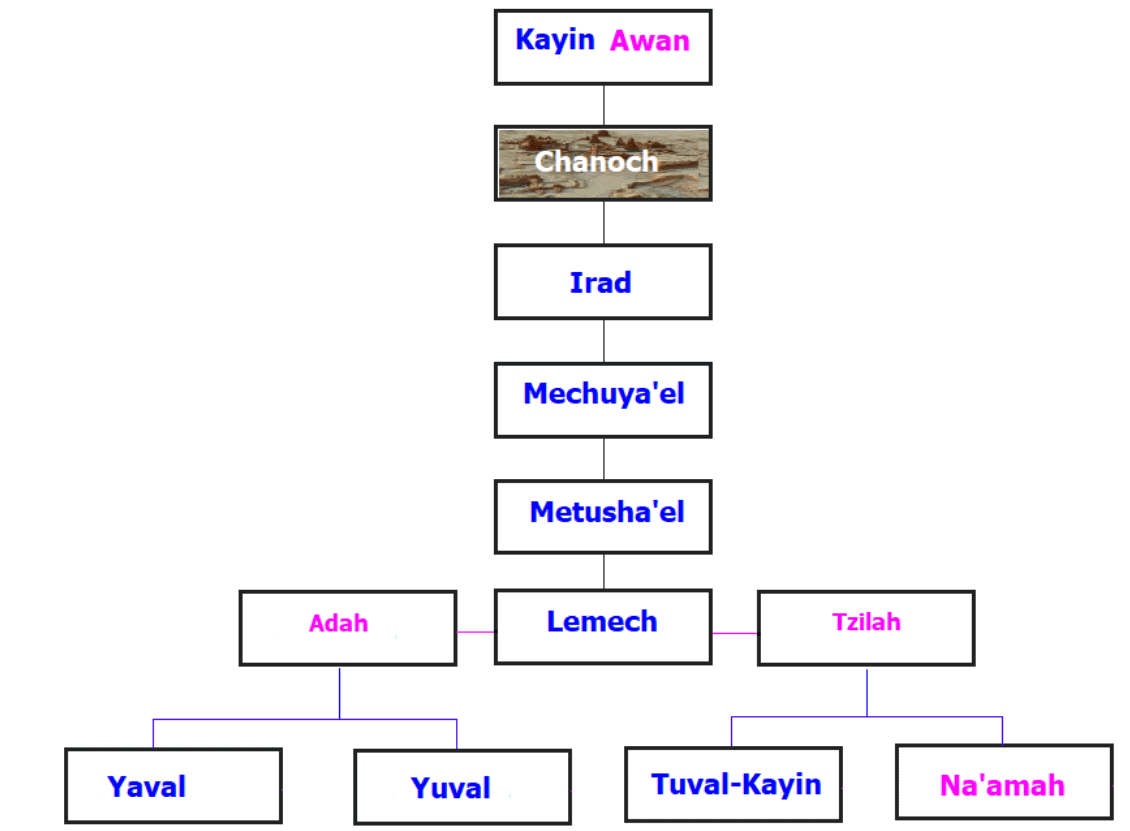
4:17 And Kayin knew his wife; and she conceived, and bare Chanoch: and he builded a city, and called the name of the city, after the name of his son, Chanoch (Enoch).
4:18 And to Chanoch (Enoch)was born Irad: and Irad begat Mechuya'el: and Mechuya'el begat Metusha'el: and Metusha'el begat Lemech.
4:19 (S:v) And Lemech took to him two wives: the name of the one [was] Adah, and the name of the other Tzilah.
4:20 And Adah bare Yaval: he was the father of such as dwell in tents, and [of such as have] cattle.
4:21 And his brother's name [was] Yuval: he was the father of all such as handle the harp and organ.
4:22 And Tzilah, she also bare Tuval-Kayin, an instructer of every artificer in brass and iron: and the sister of Tuval-Kayin [was] Na'amah.
4:23 And Lemech said to his wives, Adah and Tzilah, Hear my voice; you wives of Lemech, hearken to my speech: for I have slain a man to my wounding, and a young man to my hurt.
4:24 If Kayin shall be avenged shivatayim (sevenfold שׁבעתים), truly Lemech seventy and shivatayim.
4:25 And Adam knew his wife again; and she bare a son, and called his name Shet: For Elohim (אלהים), [said she], have appointed me another seed instead of Hevel , whom Kayin slew.
4:26 And to Shet, to him also there was born a son; and he called his name Enosh (אנושׁ): then began men to call upon the Name YHWH (יְהוָֹה).
"countenance fallen" (naflu Paniim in Hebrew) in Beresheet 4 describes Kayin's visible emotional state of anger, dejection, and shame, which stemmed from his inner spiritual rebellion and a lack of proper faith in his offering to HaShem. It signifies an outward manifestation of his inner turmoil and dissatisfaction with HaShem's judgment.
The "fallen countenance" is a physical sign reflecting the condition of Kayin's heart, which was filled with "hot indignant feelings," jealousy, and arefusal to humble himself.
The Brit Hadashah commentary in Hebrews 11:4 explains that Hevel's sacrifice was accepted because it was offered by faith, which Kayin's lacked. The fallen countenance indicated Kayin's self-pity and an unrepentant spirit, rather than godly sorrow or self-examination.e Hebrew word for "countenance" (pani or paneh) also means "presence". When HaShem did not regard his offering, Kayin could no longer feel HaShem's presence, causing his "presence" or "face" to fall.
Na'amah is identified as Noach's wife in Jewish Rabbinic literature, though the Torah itself does not name her. She is identified as the daughter of Lemech and sister of Tuval-Kayin, from Toldot Beresheet of Kayin. According to Rabbinic tradition, she is called "Na'amah" because her deeds were pleasing (ne'imim), while a dissenting view suggests her name is ironic, as she was involved in idolatry by playing a drum to attract worshippers.
She is identified as the daughter of Lemech and sister of Tuval-Kayin, from Toldot Beresheet of Kayin. According to Rabbinic tradition, she is called "Naamah" because her deeds were pleasing (ne'imim), while a dissenting view suggests her name is ironic, as she was involved in idolatry by playing a drum to attract worshippers.
The name "Na'amah" is a later addition to the biblical text from the Oral Torah. She is presented as a righteous woman who deserved to be saved from the flood in her own right, and her name is a reflection of her pleasing conduct. The tradition of identifying Na'amah as Noach's wife resolves a question in the biblical text: why the name of a woman (Na'amah, the sister of Tuval-Kayin) appears in a typically male-centric genealogy.Kayin and Hevel
Five question that Hashem asked Kayin
HaShem's subsequent question to Kayin, "Why has your countenance fallen Naflu Paniim?" was not for HaShem's information but a merciful invitation for Kayin to examine his motives, repent, and "do well" so his "countenance" could be "lifted up" or accepted.
Minchah (H4503) - gift offering, require to bring first fruit, best of what we have, an act of honoring or tribute to Elohim as the source of provider, and all thing belongs to Him.
Both Kayin (Cain)
and Hevel (Abel) each suppose to gift to Elohim the best that they have.
At first when I
began to read the Hebrew word for offering, I was wondering why was the
minchah mention in this chapter. I expected it to be Chattat or olah
has to be offered first then the grain offering.
In
Believer view I have always understood as Hevel (Abel) offered the
lamb which is the blood sacrifice sighted to be reason for Hashem's
acceptance of Hevel's sacrifice I have no doubt about this for Hashem
why He was pleased with the offering, while Kayin (Cain) offered a
bloodless sacrifice taken from the ground which was cursed.
However as a new believer
during my young days I can't help but have the tendency to have natural
response that Hashem is being "unfair". To understand the context of
this scenario is that we have to look at the Keyword the "firstling" in vs
4 fellowship or tribute or thanksgiving offering is about giving the
best of what you have to Hashem. So the word "offering" in English word
is not sin offering but a tribute or minchah or fellowship offering.
In Hebrew 11:4 describe as "a
more excellent sacrifice"
view as the blood sacrifice and it is firstling
of his Hevel's tribute gift..
So in this chapter is that Kayin did not offer his "firstling"
of his minchah (tribute) to Hashem. Kayin (Kayin H7014) name meaning "acquire" vs
1 (complete word study of NASB explains)
a sense of a "Want" Jude 1:11 referred to as "greedily" as form of wicked one (Kayin; Balaam). while
Korach covet the leadership lead to rebellion
Also we can see another Woe example is the fate of Chananyah (Ananias) and Sapphira Acts 5:1-11. The Kayin spirit has sneaked into the Assembly and both lie to the Ruach HaKodesh due to their greed.
The sin of greed and coveteousness leads to another sin such as murder, anger, lie, Jealousy.
Door - Dalet, a symbol of poor and lowly, it is a spirit of humility.
Lifted up or acceptance, elevated, able to come close to fellowship, able to draw near to HaShem