
3:1 אַחַ֣ר׀ הַדְּבָרִ֣ים הָאֵ֗לֶּה גִּדַּל֩ הַמֶּ֨לֶךְ אֲחַשְׁוֵר֜וֹשׁ אֶת־הָמָ֧ן בֶּֽן־הַמְּדָ֛תָא הָאֲגָגִ֖י וַֽיְנַשְּׂאֵ֑הוּ וַיָּ֙שֶׂם֙ אֶת־כִּסְא֔וֹ מֵעַ֕ל כָּל־הַשָּׂרִ֖ים אֲשֶׁ֥ר אִתּֽוֹ׃
Achar hadevarim ha'eleh, gidal hamelech Achashverosh et-Haman Ben-haMedata ha'Agagi vaynase'ehu; vayasem et-kis'o, me'al kol-hasarim asher ito.
After these things did melekh Achashverosh promote Haman (המן) Ben ha Medatha ha Agagi, and advanced him, and set his seat above all the princes that [were] with him.
3:2 And all ha melekh's avadim, that [were] in ha melekh's gate, bowed, and reverenced Haman (המן): for ha melekh had so commanded concerning him. But Mordechai (מרדּכי) would not bow, nor did [him] reverence.
3:3 Then ha melekh's avadim, which [were] in ha melekh's gate, said to Mordechai (מרדּכי), Why transgressest you ha melekh's commandment?
3:4 Now it came to pass, when they spoke daily to him, and he hearkened not to them, that they told Haman (המן), to see whether Mordechai (מרדּכי)'s matters would stand: for he had told them that he [was] a Yehudi.
3:5 And when Haman (המן) saw that Mordechai (מרדּכי) bowed not, nor did him reverence, then was Haman (המן) full of wrath.
3:6 And he thought scorn to lay hands on Mordechai (מרדּכי) alone; for they had shewed him the people of Mordechai (מרדּכי): wherefore Haman (המן) sought to destroy all the Yehudim that [were] throughout the whole kingdom of Achashverosh , [even] the people of Mordechai (מרדּכי).
3:7 בַּחֹ֤דֶשׁ הָרִאשׁוֹן֙ הוּא־חֹ֣דֶשׁ נִיסָ֔ן בִּשְׁנַת֙ שְׁתֵּ֣ים עֶשְׂרֵ֔ה לַמֶּ֖לֶךְ אֲחַשְׁוֵר֑וֹשׁ הִפִּ֣יל פּוּר֩ ה֨וּא הַגּוֹרָ֜ל לִפְנֵ֣י הָמָ֗ן מִיּ֧וֹם׀ לְי֛וֹם וּמֵחֹ֛דֶשׁ לְחֹ֥דֶשׁ שְׁנֵים־עָשָׂ֖ר הוּא־חֹ֥דֶשׁ אֲדָֽר׃ ס
Bachodesh harishon hu-chodesh Nisan, bishnat sheteim esreh, lamelech Achashverosh; hipil pur hu hagoral lifnei Haman, miyom leyom umechodesh lechodesh sheneim-'asar hu-chodesh Adar.
In the first month, that [is], the month Nisan, in the twelfth year of melekh Achashverosh , they cast Pur, that [is], the lot, before Haman (המן) from day to day, and from month to month, [to] the twelfth [month], that [is], the month Adar.
3:8 And Haman (המן) said to melekh Achashverosh , There is a certain people scattered abroad and dispersed among the people in all the provinces of thy kingdom; and their laws [are] diverse from all people; neither keep they ha melekh's laws: therefore it [is] not for ha melekh's profit to suffer them.
3:9 If it please ha melekh, let it be written that they may be destroyed: and I will pay ten thousand talents of silver to the hands of those that have the charge of the business, to bring [it] into ha melekh's treasuries.
3:10 And ha melekh took his ring from his hand, and gave it to Haman (המן) Ben ha Medatha ha Agagi, the Yehudim' enemy.
3:11 And ha melekh said to Haman (המן), The silver [is] given to thee, the people also, to do with them as it seemeth good to thee.
3:12 Then were ha melekh's scribes called on the thirteenth day of the first month, and there was written according to all that Haman (המן) had commanded to ha melekh's lieutenants, and to the governors that [were] over every province, and to the rulers of every people of every province according to the writing thereof, and [to] every people after their language; in the name of melekh Achashverosh was it written, and sealed with ha melekh's ring.
3:13 וְנִשְׁל֨וֹחַ סְפָרִ֜ים בְּיַ֣ד הָרָצִים֮ אֶל־כָּל־מְדִינ֣וֹת הַמֶּלֶךְ֒ לְהַשְׁמִ֡יד לַהֲרֹ֣ג וּלְאַבֵּ֣ד אֶת־כָּל־הַ֠יְּהוּדִים מִנַּ֨עַר וְעַד־זָקֵ֨ן טַ֤ף וְנָשִׁים֙ בְּי֣וֹם אֶחָ֔ד בִּשְׁלוֹשָׁ֥ה עָשָׂ֛ר לְחֹ֥דֶשׁ שְׁנֵים־עָשָׂ֖ר הוּא־חֹ֣דֶשׁ אֲדָ֑ר וּשְׁלָלָ֖ם לָבֽוֹז׃
Venishloach sefarim beyad haratzim el-kol-medinot hamelech lehashmid laharog ule'abbed et-kol-haYehudim mina'ar ve'ad-zaken taf venashim beyom echad, bishloshah asar lechodesh sheneim-'asar hu-chodesh Adar; ushelalam lavoz.
And the letters were sent by posts into all ha melekh's provinces, to destroy, to kill, and to cause to perish, all
Yehudim, both young and old, little children and women, in one
day, [even] upon the thirteenth [day] of the twelfth month,
which is the month Adar, and [to take] the spoil of them for a
prey.
3:14 The copy of the writing for a commandment to be given in every province was published to all people, that they should be ready against that day.
3:15 הָֽרָצִ֞ים יָצְא֤וּ דְחוּפִים֙ בִּדְבַ֣ר הַמֶּ֔לֶךְ וְהַדָּ֥ת נִתְּנָ֖ה בְּשׁוּשַׁ֣ן הַבִּירָ֑ה וְהַמֶּ֤לֶךְ וְהָמָן֙ יָשְׁב֣וּ לִשְׁתּ֔וֹת וְהָעִ֥יר שׁוּשָׁ֖ן נָבֽוֹכָה׃ פ
Haratzim yatze'u dechufim bidvar hamelech, vehadat nitenah beShushan habirah; vehamelech veHaman yashevu lishtot, veha'ir Shushan navochah.The posts went out, being hastened by ha melekh's commandment, and the decree was given in Shushan the palace. And ha melekh and Haman (המן) sat down to drink; but the city Shushan was perplexed.
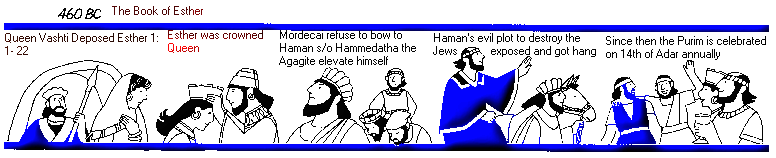
Haman is mentioned by Josephus in his Antiquities of the Jews.
In the LXX, Haman is called a 'Macedonian' by Artaxerxes (see Esther 16:10). In
it is customary when the book of Esther is read at the Purim festival, for the audience to make noise whenever "Haman" is mentioned, so that his name is not heard.
Amalekites - (Hebrew: עֲמָלֵק, Modern Amalek Tiberian ʻĂmālēq) The Amalekites became associated with ruthlessness and trickery and tyranny, even more so than Pharaoh or the Philistines, the books of 1 Samuel and Judges, the tribe of Kenites are associated with the Amalekites
the 13th day of the month of Adar would be the propitious time to annihilate Mordechai and his people.
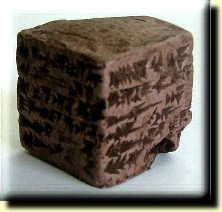 Archaeologists
have discovered an example of these clay cubes. The lot
of Iahali, the vizier of Shalmaneser III (ninth century) measures about
one inch per side. Though shaped like dice (which go back at least to the third
millennium), this has an inscription (prayers for good luck) rather than dots.
The purpose of the casting of lots is to determine which would be a favorable
day for the type of action that Haman plans to undertake. Pur = Persian for "Casting a lot" Purim = plural
This is a reproduction of a Purim belonging to Iahali who was a high official of Shalmanesser III who ruled from 858-823BC.
read
more about Mesopotamia
Archaeologists
have discovered an example of these clay cubes. The lot
of Iahali, the vizier of Shalmaneser III (ninth century) measures about
one inch per side. Though shaped like dice (which go back at least to the third
millennium), this has an inscription (prayers for good luck) rather than dots.
The purpose of the casting of lots is to determine which would be a favorable
day for the type of action that Haman plans to undertake. Pur = Persian for "Casting a lot" Purim = plural
This is a reproduction of a Purim belonging to Iahali who was a high official of Shalmanesser III who ruled from 858-823BC.
read
more about Mesopotamia