1 , 2 ,
3 , 4
Go to
Index page
3:1 וַתֹּ֥אמֶר לָ֖הּ נָעֳמִ֣י חֲמוֹתָ֑הּ בִּתִּ֞י הֲלֹ֧א אֲבַקֶּשׁ־לָ֛ךְ מָנ֖וֹחַ אֲשֶׁ֥ר יִֽיטַב־לָֽ
Vatomer lah No'omi chamotah biti halo avakesh-lach manoach asher yitav-lach.
Then her mother-in-law No'omi said to her, “My daughter, shall I not seek security for you, that it may go well for you?
3:2 וְעַתָּ֗ה הֲלֹ֥א בֹ֙עַז֙ מֹֽדַעְתָּ֔נוּ אֲשֶׁ֥ר הָיִ֖ית אֶת־נַעֲרוֹתָ֑יו הִנֵּה־ה֗וּא זֹרֶ֛ה אֶת־גֹּ֥רֶן הַשְּׂעֹרִ֖ים הַלָּֽיְלָה׃
Ve'atah halo Vo'az moda'tanu asher hayit et-na'arotav hineh-hu zoreh et-goren hase'orim hallayelah.
“Now then, is Bo'az not our relative, with whose young women you were? Behold, he is winnowing barley at the threshing floor tonight.
3:3 וְרָחַ֣צְתְּ׀ וָסַ֗כְתְּ וְשַׂ֧מְתְּ ׳שִׂמְלֹתֵךְ׳ ״שִׂמְלֹתַ֛יִךְ״ עָלַ֖יִךְ ׳וְיָרַדְתִּי׳ ״וְיָרַ֣דְתְּ״ הַגֹּ֑רֶן אַל־תִּוָּדְעִ֣י לָאִ֔ישׁ עַ֥ד כַּלֹּת֖וֹ לֶאֱכֹ֥ל וְלִשְׁתּֽוֹת׃
Verachatzte vasacht vesamt simloteche simlotayich alayich vyaradti vyaradte hagoren al-tivade'i la'ish ad kaloto le'echol velishtot.
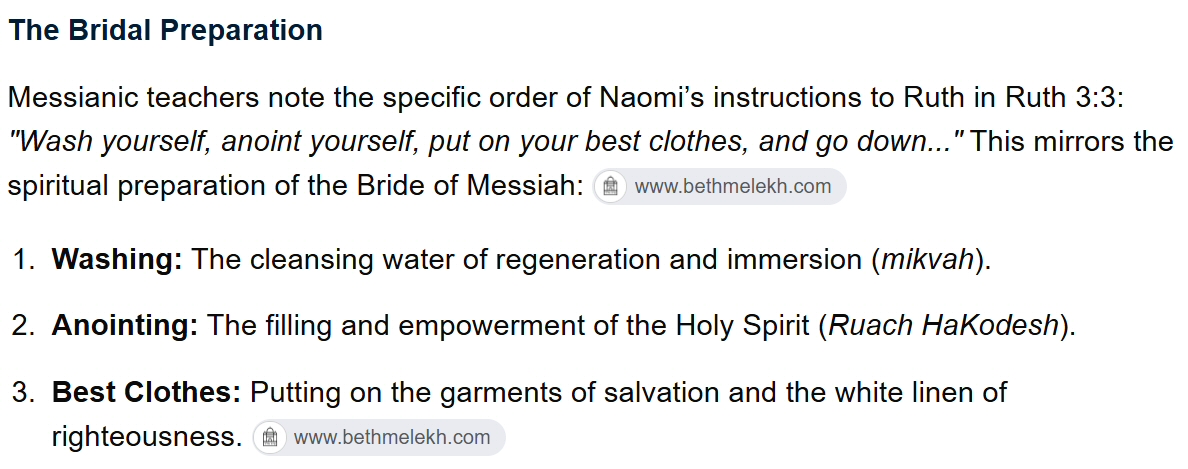
“Wash yourself therefore, and anoint yourself, and put on your best clothes, and go down to the threshing floor; but do not reveal yourself to the man until he has finished eating and drinking.
3:4 וִיהִ֣י בְשָׁכְב֗וֹ וְיָדַ֙עַתְּ֙ אֶת־הַמָּקוֹם֙ אֲשֶׁ֣ר יִשְׁכַּב־שָׁ֔ם וּבָ֛את וְגִלִּ֥ית מַרְגְּלֹתָ֖יו ׳וְשָׁכָבְתִּי׳ ״וְשָׁכָ֑בְתְּ״ וְהוּא֙ יַגִּ֣יד לָ֔ךְ אֵ֖ת אֲשֶׁ֥ר תַּעֲשִֽׂין׃
Vihi veshochvo veyada'at et-hamakom asher yishkav-sham uvat vegilit margelotav vshachaveti vshachavete vehu yagid lach et asher ta'asin.
“And it shall be when he lies down, that you shall take notice of the place where he lies, and you shall go and uncover his feet and lie down; then he will tell you what you should do.”
Rut s obedience - 5-6
3:5 וַתֹּ֖אמֶר אֵלֶ֑יהָ כֹּ֛ל אֲשֶׁר־תֹּאמְרִ֥י ׳…׳ ״אֵלַ֖י״ אֶֽעֱשֶֽׂה׃
Vatomer eleiha kol asher-tomri … elai e'eseh.
And she said to her, “All that you say I will do.”
3:6 וַתֵּ֖רֶד הַגֹּ֑רֶן וַתַּ֕עַשׂ כְּכֹ֥ל אֲשֶׁר־צִוַּ֖תָּה חֲמוֹתָֽהּ׃
Vatered hagoren vata'as kechol asher-tzivatah chamotah.
So she went down to the threshing floor and did according to all that her mother-in-law had commanded her.
3:7  וַיֹּ֨אכַל בֹּ֤עַז וַיֵּשְׁתְּ֙ וַיִּיטַ֣ב לִבּ֔וֹ וַיָּבֹ֕א לִשְׁכַּ֖ב בִּקְצֵ֣ה הָעֲרֵמָ֑ה וַתָּבֹ֣א בַלָּ֔ט וַתְּגַ֥ל מַרְגְּלֹתָ֖יו וַתִּשְׁכָּֽב׃
Vayochal Bo'az vayeshet vayitav libo vayavo lishkav biktzeh ha'aremah vatavo valat vategal margelotav
vatishkav.
When Bo'az had eaten and drunk and his heart was cheerful, he went to lie down at the end of the heap of grain; and she came secretly, and uncovered his feet and lay down.
3:8 וַיְהִי֙ בַּחֲצִ֣י הַלַּ֔יְלָה וַיֶּחֱרַ֥ד הָאִ֖ישׁ וַיִּלָּפֵ֑ת וְהִנֵּ֣ה אִשָּׁ֔ה שֹׁכֶ֖בֶת מַרְגְּלֹתָֽיו׃
Vayhi bachatzi halaylah vayecherad ha'ish vayilafet vehineh ishah shochevet margelotav.
And it came to pass at midnight, that the man was
afraid, and turned himself: and, behold, a woman lay at his feet.
3:9 וַיֹּ֖אמֶר מִי־אָ֑תּ וַתֹּ֗אמֶר אָנֹכִי֙ ר֣וּת אֲמָתֶ֔ךָ וּפָרַשְׂתָּ֤ כְנָפֶ֙ךָ֙ עַל־אֲמָ֣תְךָ֔ כִּ֥י גֹאֵ֖ל אָֽתָּה׃
Vayomer mi-at vatomer anochi Rut amatecha ufarasta chenafecha al-amatecha ki go'el atah.
So he said, “Who are you?” And she answered, “I am Rut your slave. Now spread your garment over your slave, for you are a redeemer.”
3:10 וַיֹּ֗אמֶר בְּרוּכָ֨ה אַ֤תְּ לַֽיהוָה֙ בִּתִּ֔י הֵיטַ֛בְתְּ חַסְדֵּ֥ךְ הָאַחֲר֖וֹן מִן־הָרִאשׁ֑וֹן לְבִלְתִּי־לֶ֗כֶת אַחֲרֵי֙ הַבַּ֣חוּרִ֔ים אִם־דַּ֖ל וְאִם־עָשִֽׁיר׃
Vayomer beruchah at lYHWH biti heitavt chasdech ha'acharon min-harishon levilti-lechet acharei habachurim im-dal ve'im-ashir.
Then he said, “May you be blessed of the YHWH, my daughter. You have shown your last kindness to be better than the first, by not going after young men, whether poor or rich.
3:11 וְעַתָּ֗ה בִּתִּי֙ אַל־תִּ֣ירְאִ֔י כֹּ֥ל אֲשֶׁר־תֹּאמְרִ֖י אֶֽעֱשֶׂה־לָּ֑ךְ כִּ֤י יוֹדֵ֙עַ֙ כָּל־שַׁ֣עַר עַמִּ֔י כִּ֛י אֵ֥שֶׁת חַ֖יִל אָֽתְּ׃
Ve'atah biti al-tir'i kol asher-tomri e'eseh-lach ki yodea' kol-sha'ar ami ki eshet chayil at.
“So now, my daughter, do not fear. I will do for you whatever you say, for all my people in the city know that you are a woman of excellence.
3:12 וְעַתָּה֙ כִּ֣י אָמְנָ֔ם כִּ֥י ׳אִם׳ ״…״ גֹאֵ֖ל אָנֹ֑כִי וְגַ֛ם יֵ֥שׁ גֹּאֵ֖ל קָר֥וֹב מִמֶּֽנִּי׃
Ve'atah ki omnam ki im … go'el anochi vegam yesh go'el karov mimenni.
“But now, although it is true that I am a redeemer, yet there is also a redeemer more closely related than I.
3:13 לִ֣ינִי׀ הַלַּ֗יְלָה וְהָיָ֤ה בַבֹּ֙קֶר֙ אִם־יִגְאָלֵ֥ךְ טוֹב֙ יִגְאָ֔ל וְאִם־לֹ֨א יַחְפֹּ֧ץ לְגָֽאֳלֵ֛ךְ וּגְאַלְתִּ֥יךְ אָנֹ֖כִי חַי־יְהוָ֑ה שִׁכְבִ֖י עַד־הַבֹּֽקֶר׃
lini halaylah vehayah vaboker im-yig'alech tov yig'al ve'im-lo yachpotz lego'olech uge'altich anochi chai-YHVH shichvi ad-haboker.
“Remain this night, and when morning comes, if he will redeem you, good; let him redeem you. But if he does not wish to redeem you, then I will redeem you, as the YHVH lives. Lie down until morning.”
Rut's Return to
Noomiy 14-18
3:14 וַתִּשְׁכַּ֤ב ׳מַרְגְּלֹתָו׳ ״מַרְגְּלוֹתָיו֙״ עַד־הַבֹּ֔קֶר וַתָּ֕קָם ׳בִּטְרוֹם׳ ״בְּטֶ֛רֶם״ יַכִּ֥יר אִ֖ישׁ אֶת־רֵעֵ֑הוּ וַיֹּ֙אמֶר֙ אַל־יִוָּדַ֔ע כִּי־בָ֥אָה הָאִשָּׁ֖ה הַגֹּֽרֶן׃
Vatishkav margelotav margelotaiv ad-haboker vatakam bitrom beterem yakir ish et-re'ehu vayomer al-yivada ki-va'ah ha'ishah hagoren.
And she lay at his feet until the morning: and
she rose up before one could know another. And he said, Let it not be known
that a woman came into the floor.
3:15 וַיֹּ֗אמֶר הָ֠בִי הַמִּטְפַּ֧חַת אֲשֶׁר־עָלַ֛יִךְ וְאֶֽחֳזִי־בָ֖הּ וַתֹּ֣אחֶז בָּ֑הּ וַיָּ֤מָד שֵׁשׁ־שְׂעֹרִים֙ וַיָּ֣שֶׁת עָלֶ֔יהָ וַיָּבֹ֖א הָעִֽיר׃
Vayomer havi hamitpachat asher-alayich ve'echozi-vah vatochez bah vayamod shesh-se'orim vayashet aleiha vayavo ha'ir.
Again he said, “Give me the shawl that is on you and hold it.” So she held it, and he measured six measures of barley and laid it on her. Then she went into the city.
3:16 וַתָּבוֹא֙ אֶל־חֲמוֹתָ֔הּ וַתֹּ֖אמֶר מִי־אַ֣תְּ בִּתִּ֑י וַתַּ֨גֶּד־לָ֔הּ אֵ֛ת כָּל־אֲשֶׁ֥ר עָֽשָׂה־לָ֖הּ הָאִֽישׁ׃ׁ׃
Vatavo el-chamotah vatomer mi-at biti vataged-lah et kol-asher asah-lah ha'ish.
When she came to her mother-in-law, she said, “How did it go, my daughter?” And she told her all that the man had done for her.
3:17 וַתֹּ֕אמֶר שֵׁשׁ־הַשְּׂעֹרִ֥ים הָאֵ֖לֶּה נָ֣תַן לִ֑י כִּ֚י אָמַ֣ר ׳…׳ ״אֵלַ֔י״ אַל־תָּב֥וֹאִי רֵיקָ֖ם אֶל־חֲמוֹתֵֽךְ׃
Vatomer shesh-hase'orim ha'eleh natan li ki amar … elai al-tavo'i reikam el-chamotech.
She also said, “These six measures of barley he gave to me, for he said, ‘Do not go to your mother-in-law empty-handed.’”
3:18 וַתֹּ֙אמֶר֙ שְׁבִ֣י בִתִּ֔י עַ֚ד אֲשֶׁ֣ר תֵּֽדְעִ֔ין אֵ֖יךְ יִפֹּ֣ל דָּבָ֑ר כִּ֣י לֹ֤א יִשְׁקֹט֙ הָאִ֔ישׁ כִּֽי־אִם־כִּלָּ֥ה הַדָּבָ֖ר הַיּֽוֹם׃
Vatomer shevi viti ad asher tede'in eich yipol davar ki lo yishkot ha'ish ki-im-kilah hadavar hayom.
Then she said, “Wait, my daughter, until you know how the matter turns out; for the man will not rest until he has settled it today.”
Go to Index page
Redeemer
pays the price, family member gets the benefit. It was a LEGALLY REQUIRED act
of self-sacrifice
CITIES OF REFUGE
Protected those who had killed someone from a Kinsman-Redeemer who was duty bound to kill them!TYPES OF KINSMAN-REDEEMERS
• Go’el the type who redeems the land or the person of a family member
• Go’el haDam the type who avenges the death of a family member
• Go’el the type who marries a son-less widow
• Kinsman several Hebrew terms
• Ach a sibling, a close relative, a brother-like relationship
• Karov means “near”, a near relative
• Moda intimate friend, as close as brother
Ruth—A Foreshadow of Redemption
Elimelekh
and Naomi were of the tribe of
Yehudah
and from the city of
Beit Lechem
,
where they had rights to ancestral property. But when Naomis husband and sons
died, she was unable to regain the property apart from two legal customs:
“leviratic marriage” and “the redemption of the land.”
The
“redemption of land” custom obligated the next of kin to buy back the property
which had been sold due to foreclosure or poverty so as to keep it in the
family (
Vayikra
25:25-28
).
The“leviratic marriage” custom required the nearest relative of a deceased man to
marry his widow ( D
evarim
25:5-10
). Any offspring from this union carried the name and
inheritance of the former husband. Since Naomi was beyond childbearing years,
her daughter-in-law Ruth became her substitute in marriage and bore a son to
perpetuate the family name.
Boaz
accepted the obligations of both customs: as the redeemer (goel
)
he legally cleared the land of all further claims and as a
responsible male relative he married Rut and fathered a son to continue the
family name.
The
concept of the kinsman-redeemer or
goel
is an important portrayal of the work of
Mashiach
.
The
goel
must be
the followings:-
(1)
related by blood to those he redeems Devarim
25:5
,
Devarim
25:7-10;
Yochanan
1:14,
Romaios
1:3
Php 2:5-8
Heb
2:14
,
Heb
2:15
(2)
must be able to pay the price of redemption ( Rut
2:1
1 Kefa
1:18
,
1 Kefa
1:19
)
(3)
must be willing to redeem ( Rut
3:11
Mat_20:28 Yochanan
10:15
,
Heb_10:7).
Kinsman-Redeemer Torah
Qualification
Mashiach's Fulfillment
1. Blood
Relationship
Galatia
4:4, Galatia
Heb
2:16 Heb
2:17
2. Necessary
Resources
1 Korinthos
6:20;
1 Kefa
1:18,
1 Kefa
1:19
3. Willingness
to Buy
10:15-18, 1Jhn 3:16