The Lost Chapter 29 of the Acts of the Apostles, also known as the Sonnini Manuscript, is a short text purporting to be the translation of a manuscript containing the 29th chapter of the Acts of the Apostles, detailing St. Paul's journey to Britain, where he preached to a tribe of Israelites on Ludgate Hill, the site of St Paulos's Cathedral. (The canonical book of Acts ends rather abruptly with Paul kept under house arrest in chapter 28, which has led to various theories about the history of the text.)
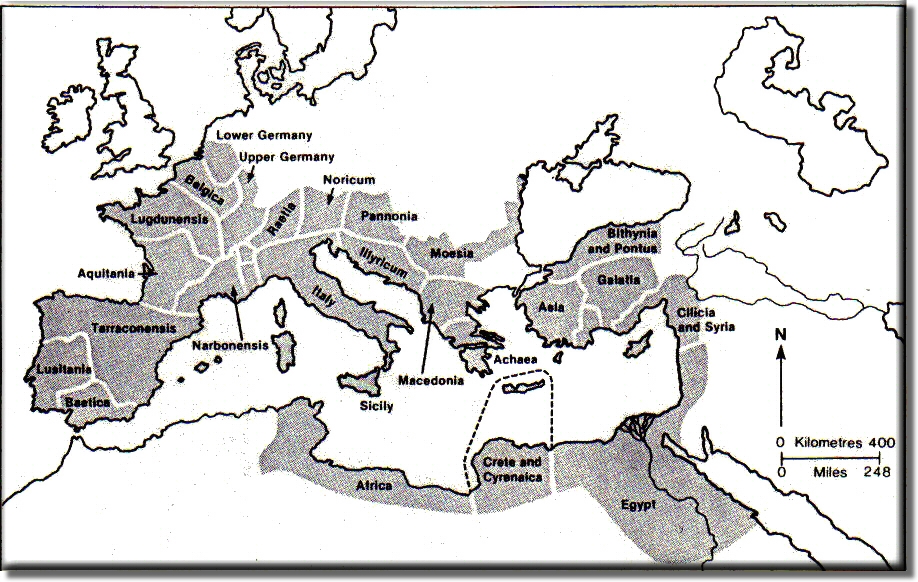
29 : 1. And Paulos, full of the blessings of Mashiach, and abounding in the spirit, departed out of Rome, determining to go into Spain, for he had a long time proposed to journey thitherward, and was minded also to go from thence to Britain.
29 : 2. For he had heard on Phoenicia that certain of Benai Yisrael, about the time of the Assyrian captivity, had escaped by sea to "The Isles afar off" as spoken of by the Prophet [Esdra], and called by the Romans – Britain.
29 : 3. And the Adonai commanded the Good News to be Proclaimed far hence to the Gentiles [nations], and to the Lost Sheep of the House of Yisrael [Acts 9:15, 22:21]
29 : 4. And no man hindered Paulos; for he testified boldly of Yeshua (ישוע) before the tribunes and among the people; and he took with him certain of the brothers which abode with him at Rome, and they took shipping at Ostrium and having the winds fair, were brought safely into a haven of Spain.
29 : 5. And much people were gathered together from the towns and villages, and the hill country; for they had heard of the conversion of the shlichim, and the many miracles, which he had wrought.
29 : 6. And Paulos Proclaimed mightily in Spain, and great multitude believed and were converted, for they perceived he was an shaliach sent from Elohim.
29 : 7. And they departed out of Spain, and Paulos and his company finding a ship in Armorica sailing to Britain, they were therein, and passing along the south coast, they reached a port called Raphinus. (This is the Roman name for Sandwhich, in Kent. In Saxon times there was, still standing in Sandwhich, an old house called the "House of the shlichim" and tradition has it that Paulos was one of the shlichim).
29 : 8. Now when it was voiced abroad that the shaliach had landed on their coast, great multitudes of the inhabitants met him, and they treated Paulos courteously and he entered in at the east gate of their city, and lodged in the house of an Hebrew and one of his own nation (tribe).
29 : 9. And on the morrow he came and stood upon Mount Lud (Ludgate Hill and Broadway where St. Paulos’s Cathedral stands in London, England) and the people thronged at the gate, and they believed the Word and testimony of Yeshua (ישוע).
29 : 10. And even the Ruach HaKodesh fell upon Paulos, and he prophesied, saying, Behold in the last days the Elohim of Peace shall dwell in the cities, and the inhabitants thereof shall be numbered: and in the seventh numbering of the people, their eyes shall be opened, and the gory of their inheritance shine forth before them. The nations shall come to worship on the mount that testifies of the patience and long suffering of a servant of the Adonai.
29 : 11. And in the latter days new tidings of the Good News shall issue forth out of Yerushalayim, and the hearts of the people shall rejoice, and behold, fountains shall be opened, and there shall be no more plague.
29 : 12. In those days there shall be wars and rumor of war; and a king shall rise up, and his sword, shall be for the healing of the nations, and his peacemaking shall abide, and the glory of his kingdom a wonder among princes.
29 : 13. And it shall come to pass that certain of the Druids came to Paulos privately, and showed by their rites and ceremonies that they were descended from Yehudim [Judahites] which escaped from bondage in the land of Mitzrayim, and the shaliach believed these things, and he gave them the kiss of Shalom.
29 : 14. And Paulos abode in his lodgings three months confirming in the faith and Proclaiming Mashiach continually.
29 : 15. And after these things Paulos and his brethren departed from Raphinus and sailed to Atium in Gaul.
29 : 16. And Paulos Proclaimed in the Roman garrison and among the people, exhorting all men to repent and confess all their sins.
29 : 17. And there came to him certain of the Belgae to inquire of him the new doctrine, and of the man Yeshua (ישוע); and Paulos opened his heart to them and told them all things that had befallen him, however, that Mashiach Yeshua (ישוע) came into the world to save sinners; and they departed pondering among themselves upon the things which they had heard.
29 : 18. And after much Proclaiming and toil, Paulos and his fellow labourers passed into Helvetia, and came to Mount Pontius Pilatos, where he who condemned the Adonai Yeshua (ישוע) dashed himself down headlong, and so miserably perished.
29 : 19. And immediately a torrent gushed out of the mountain and washed his body, broken in pieces, into a lake.
29 : 20. And Paulos stretched forth his hands upon the water, and prayed to the Adonai saying O Adonai Elohim, give a sign to all nations that here Pontius Pilatos which condemned your only-begotten Son, plunged down headlong into the pit.
29 : 21. And while Paulos was yet speaking, behold, there came a great earth-quake, and the face of the waters was changed, and the form of the lake like to the Son of Man hanging in an agony upon the Stake.
29 : 22. And a voice came out of heaven saying, "Even Pilatos has escaped the wrath to come for he washed his hands before the multitude at the blood shedding of the Adonai Yeshua (ישוע)"[Mattityahu 27:24].
29 : 23. When, therefore, Paulos and those that were with him saw the earthquake, and heard the voice of the messenger, they glorified Elohim, and were mightily strengthened in the spirit.
29 : 24. And they journeyed and came to Mount Ioulios where stood two pillars, one on the right hand and one on the left hand, erected by Kaisar Augoustos.
29 : 25. And Paulos, filled with the Ruach HaKodesh, stood up between the two pillars, saying, "Men and Brothers these stones which you see this day shall testify of my journey hence; and I truly say, they shall remain until the outpouring of the spirit upon all (Yisrael) nations, neither shall the way be hindered throughout all generations."
29 : 26. And they went forth and came to Illitricum, intending to go by Macedonia into Asia, and grace was found in all the Assemblies, and they prospered and had shalom. Amein!
Go to Index page
Ludgate Hill is a hill in the City of London, near the old #Ludgate , a gate to the City that was taken down, with its attached gaol, in 1780. It is the site of St. Paul's Cathedral,
traditionally said to have been the site of a Roman temple of the goddess Diana. It is one of the three ancient hills of London, the others being Tower Hill and Cornhill. The highest point is just north of St. Paul's, at 17.6 metres (58 ft) above sea level.
In AD 50, #Ludgate Hill was a natural hill on the western edge of the emerging Roman settlement of Londinium. The area was in the early stages of development shortly after the Roman invasion of Britain in AD 43, and the landscape was defined by its geography rather than established urban structures.
In the time of the Apostle Paul (around 50-60 AD), Ludgate Hill was a significant hill in Roman Londinium, likely featuring a gate (Ludgate) and perhaps a temple, with a growing settlement leading up to the high point where a precursor to St. Paul's Cathedral would eventually stand, serving as a focal point for the Roman city's north-western entrance.