27th Day of the Month
Book 1 1, 2, 3, 4, 5, 6, 7, 8, 9, 10, 11, 12, 13, 14, 15, 16, 17, 18, 19, 20, 21, 22, 23, 24, 25, 26, 27, 28, 29, 30, 31, 32, 33, 34, 35, 36, 37, 38, 39, 40, 41,
Book 2 42, 43, 44, 45, 46, 47, 48, 49, 50, 51, 52, 53, 54, 55, 56, 57, 58, 59, 60, 61, 62, 63, 64, 65, 66, 67, 68, 69, 70, 71, 72,
Book 3 73, 74, 75, 76, 77, 78, 79, 80, 81, 82, 83, 84, 85, 86, 87, 88, 89,
Book 4 90, 91, 92, 93, 94, 95, 96, 97, 98, 99, 100, 101 , 102, 103, 104, 105, 106,
Book 5 107, 108, 109, 110, 111, 112, 113, 114, 115, 116, 117, 118, 119, 120, 121, 122, 123, 124, 125, 126, 127, 128, 129, 130, 131, 132, 133, 134, 135, 136, 137, 138, 139, 140, 141, 142, 143, 144, 145, 146, 147, 148, 149, 150
Shir HaMa'alot שִׁיר הַמַּעֲלוֹת
120, 121, 122, 123, 124, 125, 126, 127, 128, 129, 130, 131, 132, 133, 134,
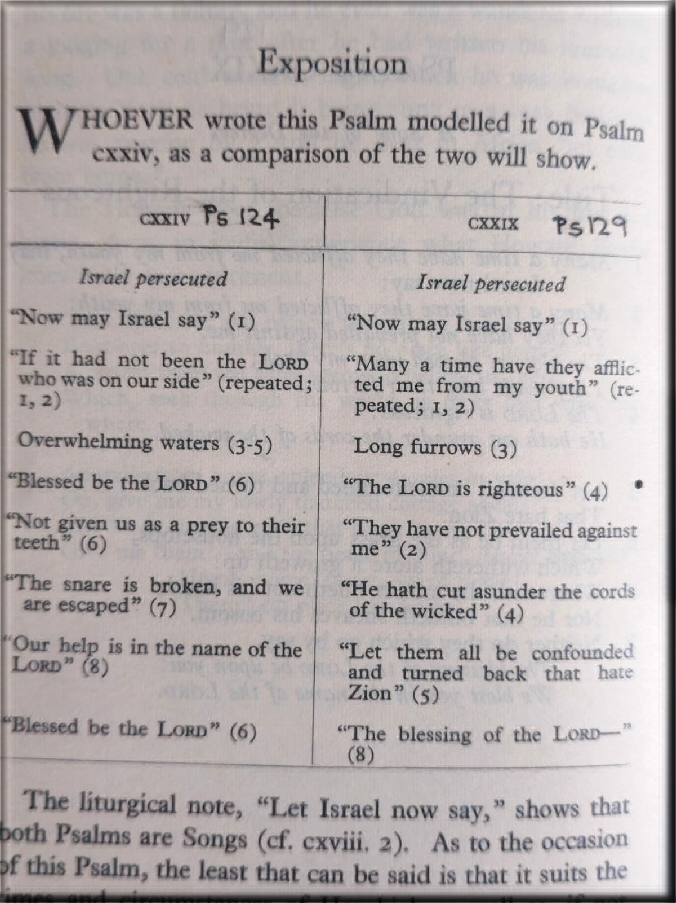
129:2 Many a time have they afflicted me from my youth: yet they have not prevailed against me.
129:3 The plowers plowed upon my back: they made long their furrows.
129:4 YHWH (יהוה) [is] tzaddik: he hath cut asunder the cords of the wicked.
129:5 Let them all be confounded and turned back that hate Tziyon.
129:6 Let them be as the grass [upon] the housetops, which withereth afore it groweth up:
129:7 Wherewith the mower filleth not his hand; nor he that bindeth sheaves his bosom.
129:8 Neither do they which go by say, The blessing of YHWH (יהוה) [be] upon you: we bless you in the Name of YHWH (יהוה).
Book 1 1, 2, 3, 4, 5, 6, 7, 8, 9, 10, 11, 12, 13, 14, 15, 16, 17, 18, 19, 20, 21, 22, 23, 24, 25, 26, 27, 28, 29, 30, 31, 32, 33, 34, 35, 36, 37, 38, 39, 40, 41,
Book 2 42, 43, 44, 45, 46, 47, 48, 49, 50, 51, 52, 53, 54, 55, 56, 57, 58, 59, 60, 61, 62, 63, 64, 65, 66, 67, 68, 69, 70, 71, 72,
Book 3 73, 74, 75, 76, 77, 78, 79, 80, 81, 82, 83, 84, 85, 86, 87, 88, 89,
Book 4 90, 91, 92, 93, 94, 95, 96, 97, 98, 99, 100, 101 , 102, 103, 104, 105, 106,
Book 5 107, 108, 109, 110, 111, 112, 113, 114, 115, 116, 117, 118, 119, 120, 121, 122, 123, 124, 125, 126, 127, 128, 129, 130, 131, 132, 133, 134, 135, 136, 137, 138, 139, 140, 141, 142, 143, 144, 145, 146, 147, 148, 149, 150
Psalm 129 is a Song of Ascent, traditionally sung by Jewish pilgrims on their way to Jerusalem,
reflecting on Israel's long history of affliction and HaShem's faithfulness in delivering them from their enemies.
It acknowledges the numerous times Yisrael has been oppressed but emphasizes their resilience and HaShem's righteous intervention.
The psalm also includes a prayer for the downfall of those who hate Zion, comparing them to withered grass.
Steps in the Temple: Some interpretations link the "ascents" to the fifteen steps between the outer and inner courtyards of the Second Temple.
Historical Origins:
The Psalms of Ascents are traditionally believed to have been composed during the time of the Babylonian Exile and the subsequent return to Jerusalem.
Their origins are rooted in the practices of pilgrimage to the Temple in Jerusalem, where Jews would travel three times a year for major festivals like Passover, Shavuot, and Sukkot.
Although the exact date of their compilation is debated, references appear in ancient religious texts, solidifying their communal and spiritual significance over centuries.
The Psalm has two stanzas of four verses each.
The first stanza refers to the past, and the second, to the future; one is retrospect and the other is prospect; the one tells of the affliction of the righteous (1-4), and the other, of the judgment of the unrighteous (5-8).
In the first stanza the failure of the enemy is stated (2b); and in the second, it is sought (5, 6).Stanza I.
The Affliction of the Righteous. Past (1-4).
Stanza II.
The Judgment of the Unrighteous-Future. (5-8).
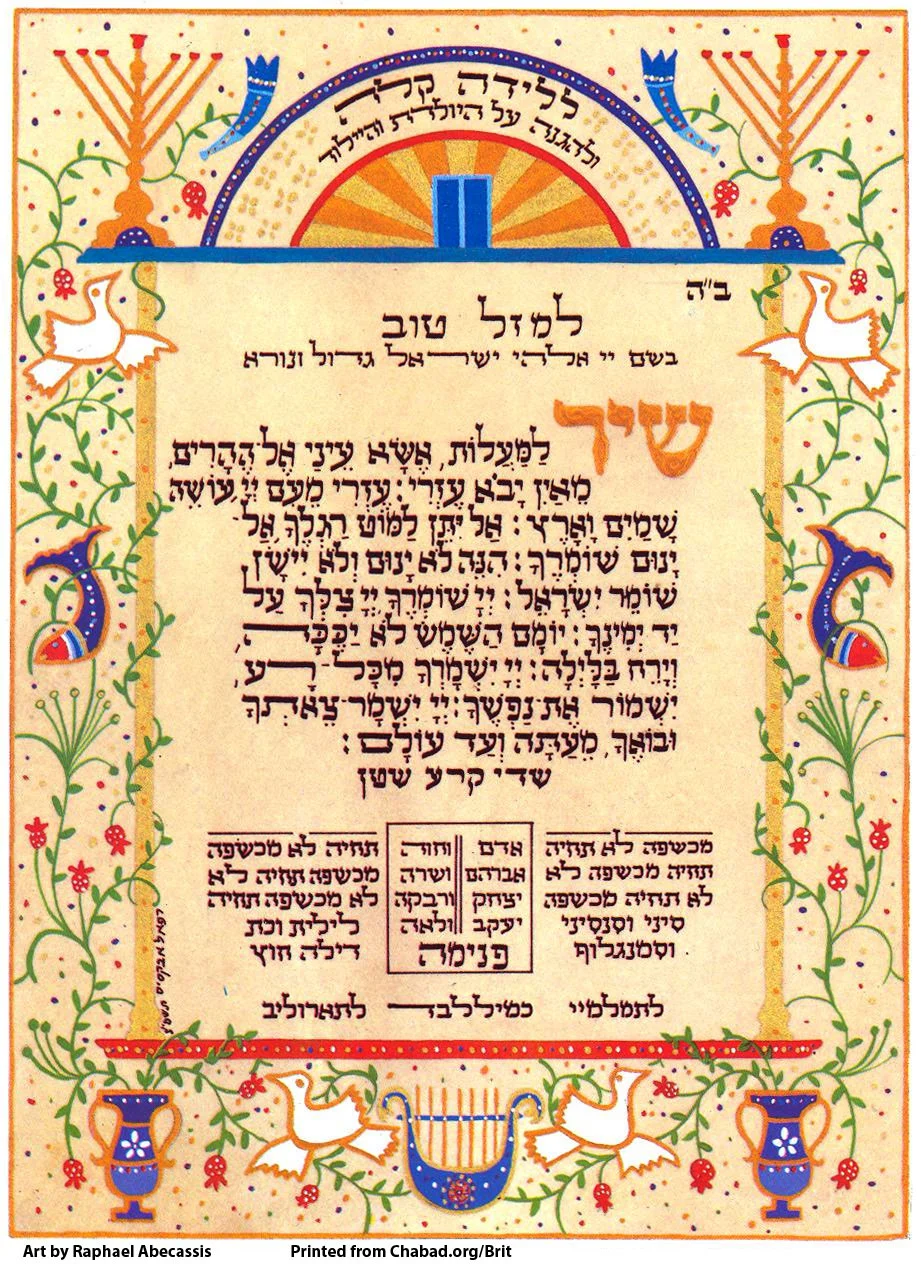
1) It is customary to hang a Shir Lamaalot1 in the room of the new mother and the newborn, immediately upon the expectant mother’s arrival at the hospital. This serves as a safeguard for the mother etc., both during the birth itself so that it will proceed normally and easily,
and also during the following days, so that they will survive for a long life.
Another reason given is that this is a part of [the child’s] education so that the first thing that the child sees will be something holy (from this we may also infer how important it is to ensure that the child does not look at pictures of unclean things).